

You have encountered distressed sea turtles - Phone *3639
Report on sea turtles
Report on sea turtles
Did you come across a turtle in distress? Report here or dial *3639
Did you come across a dead turtle? Please let us know. Reports of dead turtles help us monitor the population in our area. more than 200 sea turtles are beached in Israel every year –70 percent already dead. We collect reports on carcasses and analyze the data for purposes of annual follow up according to various parameters (size of the beached turtles, number of beached turtles per season, area, etc.).
What do we want to know? The most basic data are date of observation and location. In addition, it’s important to us to know if it is a green sea turtle or a loggerhead, and whether it is male or female. To make a clear identification, we recommend sending a photograph. We would also like to know whether there are signs that the animal was injured (for example fishhooks or nets, if present), and whether one of the turtle’s limbs bears a metal or plastic tag. The information on such a tag can tell us a great deal about it. The tag means that the turtle was in captivity at some point, whether for research, in an aquarium or zoo, or in a rescue center somewhere in the world.
Did you spot a living turtle in its natural environment? We’d like to receive details and photographs.
Reports on living or dead turtles can be made via this email address: israelseaturtle@npa.org.il
In an emergency – dial *3639
FAQ
Try to see whether it is alive or dead. Is it breathing? Is it moving? Blinking? Is it very bloated? Is its head held up but not moving?
A live turtle will not necessarily move if it is very exhausted, but it will blink and breathe every few minutes. A dead turtle might look alive if its head is held up and its mouth is open, because of rigor mortis. A dead turtle might also be very bloated, depending on how much time has passed since it died.
If the turtle is alive, don’t try to return it to the sea – it needs medical attention! Report it to the rescue center and keep watch over it until a ranger arrives. If the turtle is tangled in garbage, don’t try to untangle it! Sometimes removing such blockage can kill the turtle. We will remove it under controlled conditions at the rescue center.
If the turtle is dead, report it to the rescue center. Photograph it, and check whether it has a tag attached to its limbs. This tag might tell us about treatment it has received in the past.

A dead turtle. Photographer: Michael Hauser
Between May and August you might meet egg-laying turtles, especially at night and early in the morning. If you encounter an egg-laying turtle, report it immediately to the Israel Nature and Parks Authority information line, *3639. It is very important not to disturb a turtle while she is laying her eggs, because she will feel threatened and return to the sea without laying. And so watch from a distance and keep others from going near her. Try to keep noise and artificial light to a minimum, and don’t photograph with a flash. Laying eggs is hard for the female, but she doesn’t need our help, so don’t go near her or touch her. Leave her to lay her eggs and return to the sea in peace. After the eggs are laid, don’t try to
dig into the nest and don’t erase the traces in the sand. Document the location of the nest so an Israel Nature and Parks Authority ranger can find it.

Egg-laying turtle. Photograph: Yaniv Levi
Sea turtle eggs hatch from July to September. Most eggs hatch at nesting farms under supervision, but occasionally a nest is not found during nesting season, or it is found and left in place. If you encounter a natural hatching, report it immediately to the Israel Nature and Parks Authority information line, *3639. Allow the hatchlings to crawl to the sea on their own and keep animals and vehicles away from them. If possible, count them, but don’t shine light on them or photograph them with a flash. If the hatchings are crawling toward artificial light instead of to the sea, pick them up gently and move them to a darker area of the beach. The hatchlings will crawl toward the sea. Important! Hatchlings need to crawl in this way; don’t try to help them by moving them closer to the water.

Hatchlings. Photograph: Omer Wallwater
Gallery
Irresistible photos and video clips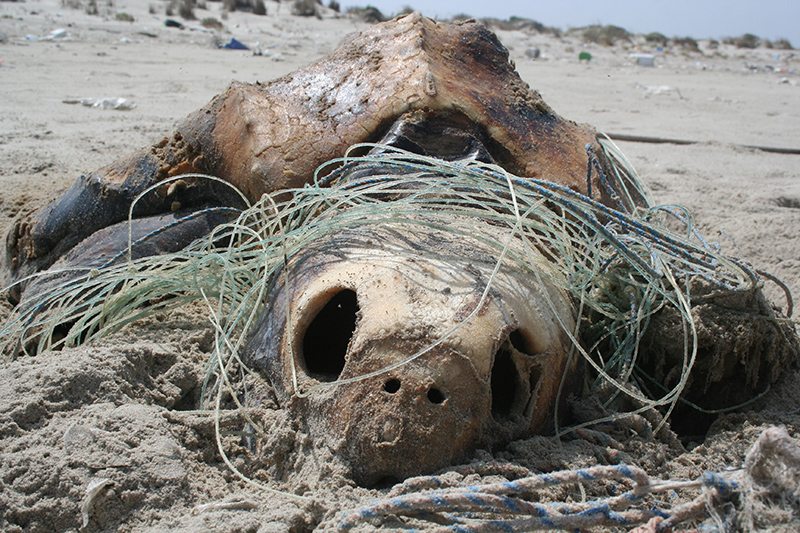
צב מת מחוטי ניילון
צב מת מחוטי ניילון

צב-במצוקה.jpg
חייגו 3639*
צב-במצוקה.jpg
