
HaMasrek Nature Reserve- Nature Class
15/05/2025How Were the Trench and the Caves Created? | A Mountainside Tilled – A Challenge Fulfilled | In the Heart of the Woodland | In the Shade of the Oaks and the Terebinths | The Tree Trunk that Became a Legend | Pine Stories | The Convoys to Jerusalem | The Survival of Sacred Trees | The “Teeth” of HaMasrek | Life on the Frontier | Fires
How Were the Trench and the Caves Created?
The trench alongside the trail is called a communications trench: It connected firing and defensive positions, and protected soldiers as they moved though it and transported equipment. The trench bears witness to a period in which this area was a frontier. HaMasrek Nature Reserve is located in the heart of the “Jerusalem Corridor” – so named because from the War of Independence until the Six-Day War it was flanked by Jordanian-controlled territory.
Look at the rocks on display, and refer to the descriptions below to identify the rock from which the cave and the communications trench are hewn.
* Protect the rocks, so visitors who come after you can enjoy them.
- Chalk
This impervious rock is the softest of the three types, rendering it easy to hew and use in construction.

2. Limestone
Your fingernail won’t make a scratch in this fairly hard rock, but iron tools will. Water permeates limestone and creates springs, caves and even stalactites and stalagmites. Limestone is used mainly for construction.

3. Flint
This hard, gray rock is usually found in chunks or layers in chalk or limestone. When struck with another hard material it splinters into thin, sharp fragments and when struck with metal, a spark is created. These characteristics rendered flint important in tool-making and igniting fires.

A Mountainside Tilled – A Challenge Fulfilled
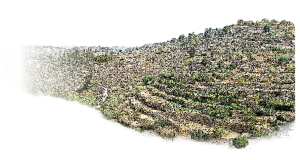
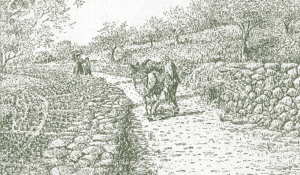
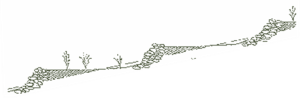
Throughout history, the mountain people who sought to cultivate the slopes faced a problem: How to till them? Planting, irrigating and plowing are complicated on slopes! And so they transformed them into long, narrow, flat strips by building “steps” full of soil. These are the agricultural terraces you see here.
Plowing an agricultural terrace in the old days
Cross-section depicting construction of a terrace
Look around at the slopes. Can you identify the agricultural terraces?
Did You Know?
Slope agriculture is based on a type of irrigation called shalhin in Hebrew. The term comes from the Hebrew word for “send,” because water to irrigate terrace agriculture was “sent” in channels from a nearby spring. Rainfall-based agriculture is called ba’al agriculture, named after the chief Canaanite deity, who was the god of rain, lightning and thunder.
In the Heart of the Woodland
HaMasrek Nature Reserve is located in a Mediterranean climate zone, where thickets of evergreens intermingle with shrubs, vines and grasses. The diverse plant life in Mediterranean woodlands owes its richness to environmental factors such as soil types, proximity to the sea and altitude.
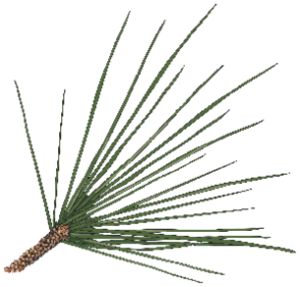
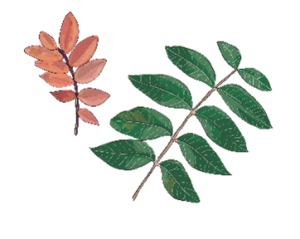
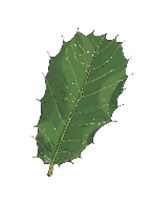
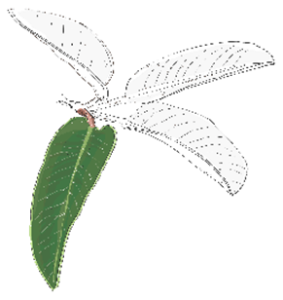
Discover the diversity of Mediterranean plant life! Look around and try to find as many leaves as possible in differing sizes, shapes and colors. How many different types of plants can you spot? Now, try to match the leaves to their corresponding plant using the guide below.
- Jerusalem pine
- Terebinth
- Kermes oak
- Eastern strawberry tree
- Broad-leaved phillyrea
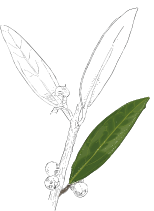
- Lentisk
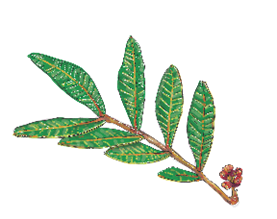
- Carob
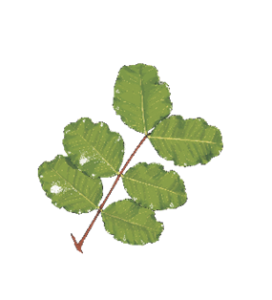
- Italian buckthorn
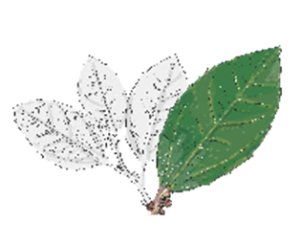
- True laurel
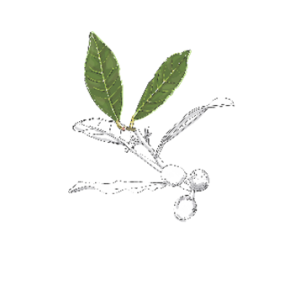
- Prickly burnet
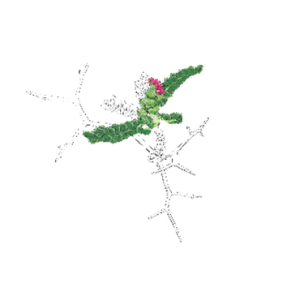
Do you want to remember what you saw? Snap a picture! Please don’t collect or pick the leaves. In a nature reserve, animals, plants and inanimate objects are protected and must be left in the reserve.
In the Shade of the Oaks and the Terebinths
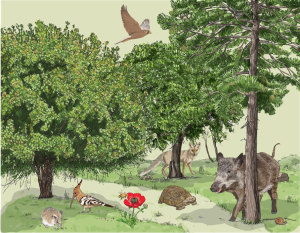
Mediterranean woodlands serve as vital habitats for a diverse array of plant and animal species. The rich variety of trees, shrubs, vines and grasses offers abundant opportunities for shelter, food and local climate conditions. This variegation transforms the woodland into a world of its own, where each organism plays a crucial role in the fabric of life.
Did You Know?
The ecosystem is complex: Each animal and plant plays a role through its interaction with other components in the system. If we harm one component we can’t foresee the full impact on nature as well as humans.
Let’s Play a Game
Stand in a circle. Each participant chooses the name of an animal or a plant around you; for example, Kermes oak, spur-thighed tortoise, honeybee, turban buttercup, red fox, terebinth, wild boar, Cairo spiny mouse, common kestrel, Jerusalem pine or hoopoe.
Think about as many characteristics as possible that connect these species. For example, who eats whom? Whose shade provides refuge for others? Who relies on whom? Show the connections you have with each other by grasping someone else’s hand or a foot. Did you get tangled up? What would happen to the tangle you created if someone cut down a tree in the reserve, or if a fire breaks out?
The Tree Trunk that Became a Legend
The eastern strawberry tree stands out with its distinctive bark – reddish in color and annually shedding its outer layer to thwart pests and fungi. Eastern strawberry trees thrive in soils rich in chalk and marl, which can be found only in certain places in the Judean Mountains.
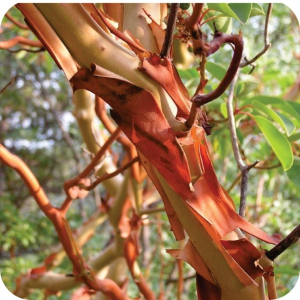
The curious color of the bark has sparked creative thinking, giving rise to many legends about this species. You can read one such legend below. Look around at nature’s wonders and try to make up your own legend.
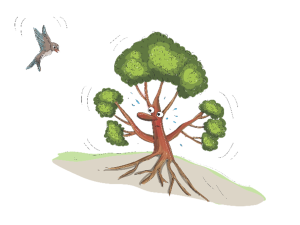
Once upon a time there was a songbird that soared above the treetop. Envious of the bird, the tree also longed to fly. Its roots, of course, did not allow this, but it grew red with the effort, and remains so to this very day.
Pine Stories
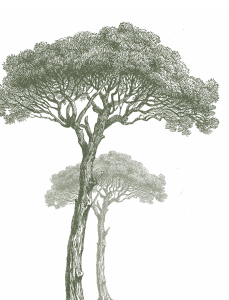
The abundance of plant life in this area led to its official designation as a nature reserve. It’s unique because of the eastern species of Jerusalem pines that grow are about 150 years old. Unlike the surrounding forest, where pines were deliberately planted, the eastern species is local, and does naturally not form a dense forest. Scattered across the mountain ridge, these pines preserve long-ago landscapes, before tree planting began in the region. The Judean Mountains are the southernmost global natural boundary for this species of pine.
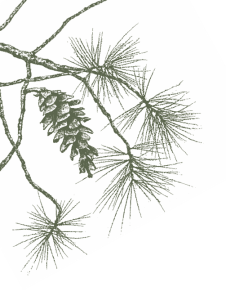
Look for pinecones with a range of appearances and learn their story:
- A pinecone gnawed by a rat. Rats love to eat pine nuts, and so they chew on the pinecone’s scales to get to them.

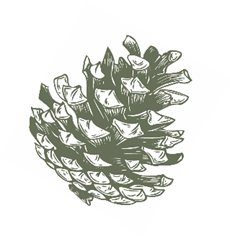
- A young or wet pinecone. This cone closes its scales when the weather is cold and damp.
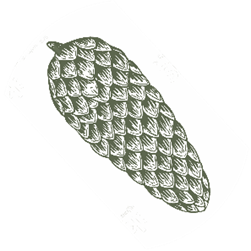
- A mature pinecone, or one that opened in hot, dry weather.
The Convoys to Jerusalem
The Judean Mountains tower over the lowland hills, a feature that made the region strategic and the scene of bloody battles. Fighters on both sides understood that control over the pass into the Judean Mountains meant control over the road to Jerusalem. It took three military operations to open the main road to Jerusalem through Sha’ar HaGai (“the valley gateway”). In May 1948, an unpaved detour was cut through the mountains – the Burma Road – which winds along the foot of the reserve near Latrun.

The Survival of Sacred Trees
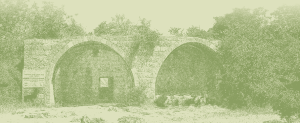
The ruins of this structure are the remains of a sheikh’s tomb and a Muslim place of prayer known as a maqam. According to local traditions, this is the tomb of Sheikh Ahmad al-Ajami, renowned as the prophet Mohammad’s barber. Reverence for this site saved the surrounding large, ancient pine trees, thus preserving the landscape as it was in the old days.
Did You Know?
Trees preserved at sacred sites and rituals conducted in their vicinity are practices known in various places and cultures in Israel and abroad. The Bible refers to a tree-related cult in the Land of Israel:
“They sacrifice on the mountaintops and offer on the hills,
Under oaks, poplars, and terebinths whose shade is so pleasant” (Hosea 4:13).
The “Teeth” of HaMasrek
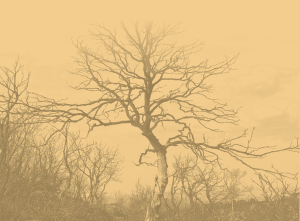
Most of the pine trees in Israel were deliberately planted. But those in HaMasrek reserve are natural, and are believed to be over 100 years old. In the summer of 2001 a major fire broke out in the reserve and killed most of the old trees.
Did You Know?
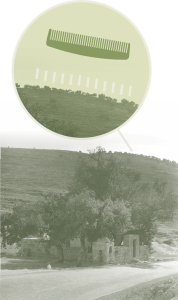
To the Palmach fighters who came upon this site in their efforts to open the road to Jerusalem, the large pine trees protruding from the hilltop looked like the teeth of a comb. They dubbed the site “HaMasrek,” Hebrew for “the comb.” Most of the old pine trees have burned down, but the name of the reserve reminds us of the landscape of bygone days.
Did You Know?
Fire spreads quickly in pine forests due to the trees’ flammable sap, easily combustible pine needles and pinecones that burst open and fly off when they catch fire, spreading the flames. Garbage left in the forest also feeds fires. Please make sure to dispose of all garbage in the bins at the entrance to the reserve.
Life on the Frontier
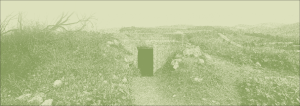
HaMasrek Nature Reserve is situated in the heart of the “Jerusalem Corridor,” so named because from the War of Independence to the Six-Day War it was flanked by territory under Jordanian control. During the first three years of the state, some 20 new communities were established in the corridor, among them nearby Beit Meir. The structure you see here was built in the early 1950s by the residents of Beit Meir to help fight infiltration into the Jewish communities in the heart of the corridor.
Fires
Fires endanger nature, damaging soil, plant life and wild animals alike. Large, swift animals may manage to flee the flames, and they lose their homes, But smaller, slow animals like the spur-thighed tortoise, lizards, snakes and small rodents may perish. Fire also harms insects and anthropods (such as butterflies, ants, praying mantises, grasshoppers and beetles), which are essential to the food chain and a healthy ecosystem. Plants and animals depend on these small creatures for processes like seed dissemination, pollination and soil turnover.
How to Prevent the Devastating Impact of Fires?
- Encourage the growth of resistant local species that regenerate after a fire (unlike the flammable pine tree, which spreads fire when its pinecones ignite).
- Create “fire breaks” – wide, treeless paths with grasses and annual vegetation that slow the spread of fire and facilitate safe access by firefighters.
- Promote public awareness to prevent the outbreak of fires due to negligence and emphasize the importance of halting the spread of fire.
- Conduct post-fire monitoring and research to assess damage and develop rehabilitation strategies.
You might be interested too


Categories