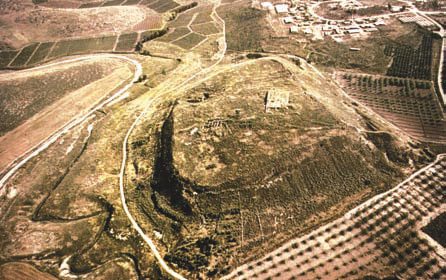
Tel Lachish National Park
Meet Tel Lachish National Park
At Tel Lachish, the Bible, ancient texts and archeology come together to tell one single, fascinating story.
Over the past few years the Israel Nature and Parks Authority undertook an extensive development project at Tel Lachish National Park to bring the site alive for visitors and enhance their experience.
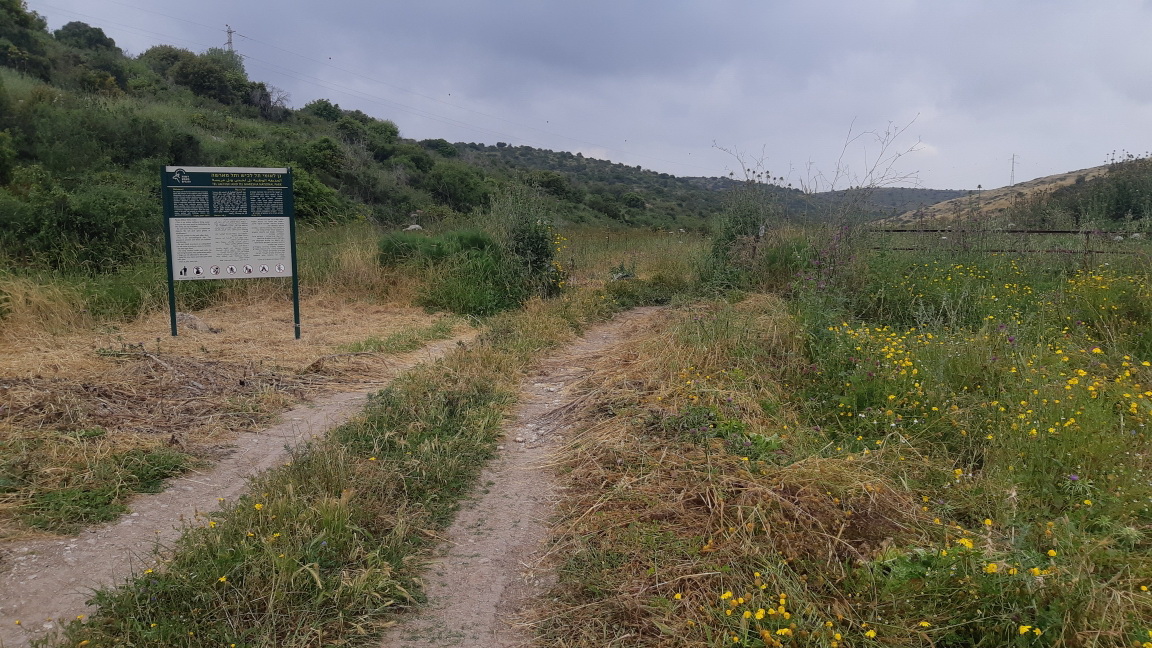
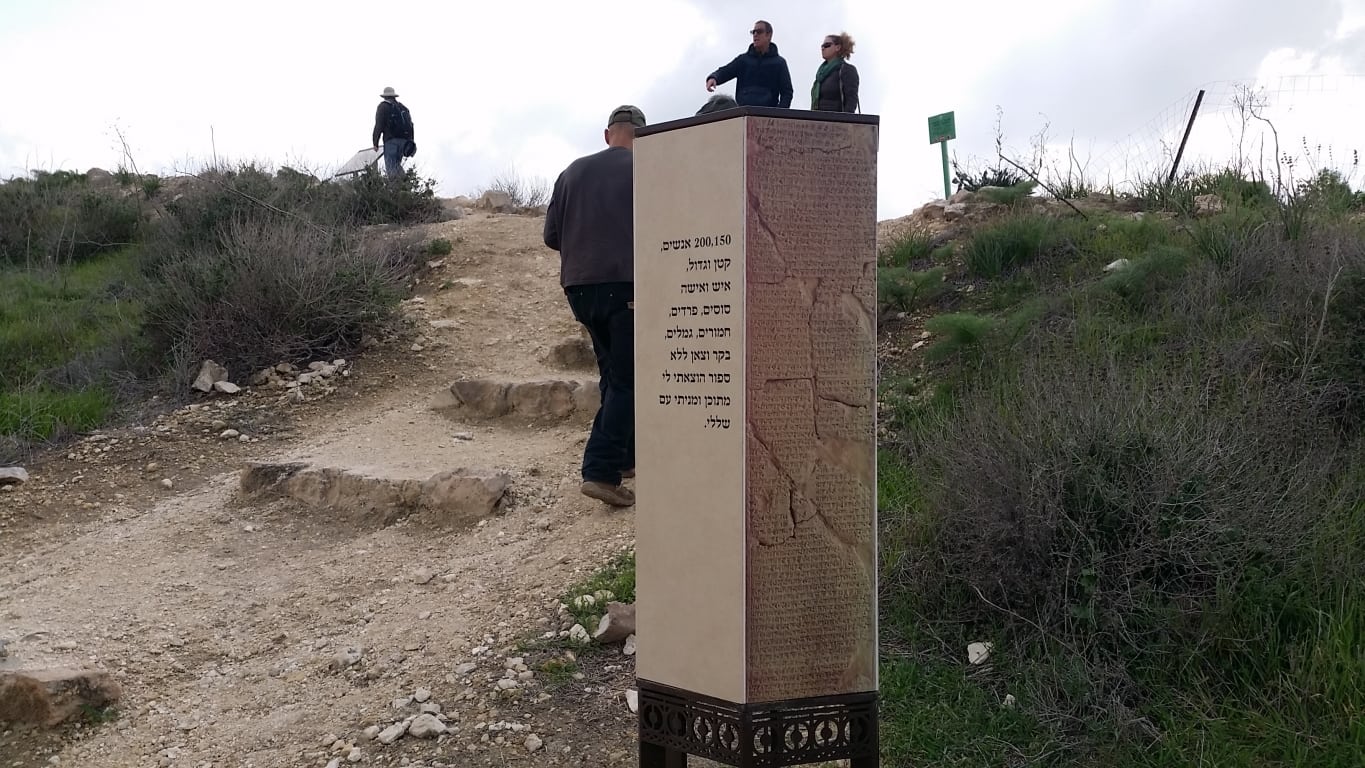
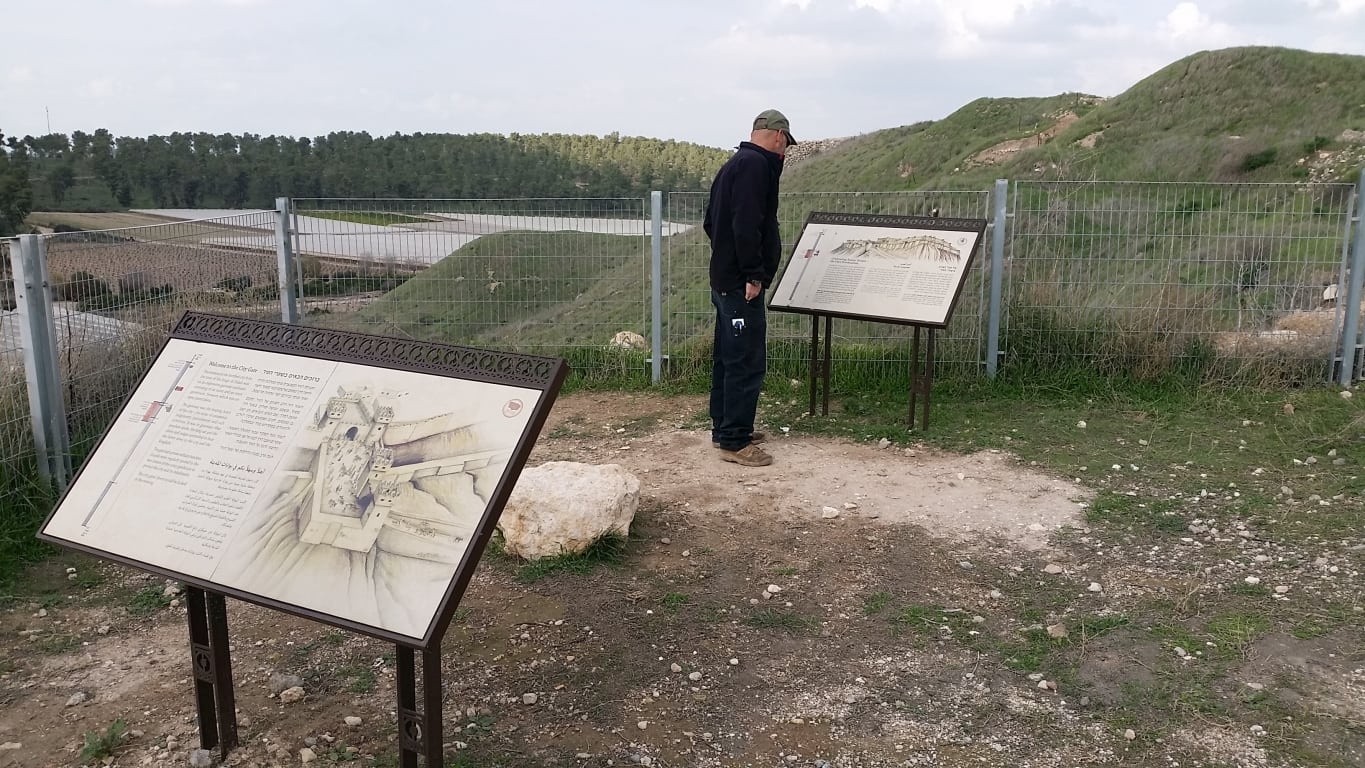
Paths have now been created to the site’s main points of interest, and new interpretive signage leads visitors through the intricacies of the historical, biblical and archaeological saga.
A new visitor center enriches the site, as well as a visitor’s service center, from which you set out on an independent tour of the site. We look forward to introducing you to the unique story of Tel Lachish – a story of conquests, faiths and lifestyles, and to enjoy the new film screened at the visitor center.
Please note:
- The visit to Tel Lachish is suitable for the whole family.
- The film in the visitor center is suitable for children age 9 and above.
- Please see the cashier 10 minutes before your scheduled visit.
- Reserve ahead to see the film in Arabic or English.
Click to download the map of the national park
The finds discovered at Tel Lachish attest to human settlement as early as the Neolithic period (7500–4000 BCE). During the Middle Bronze Age II (1750–1550 BCE) the city was surrounded by a huge embankment, which gave the tell its distinctive shape and steep slopes, which it retains to this day.
During the Late Bronze Age (1550–1200 BCE) Lachish, like the other Canaanite cities, was ruled by Egypt. At El Amarna in Egypt documents were discovered sent by kings of Canaan to the rulers of Egypt (fourteenth century BCE), including some documents from kings of Lachish. Hieroglyphic inscriptions and Egyptian anthropoid coffins dating to this period were found at the tell.
Lachish was destroyed in the first half of the twelfth century BCE. Some 1,500 skulls were found in this destruction layer, indicating the mass killings that had taken place here. The city remains in ruin for some 200 years and was rebuilt during the period of the kings of Judah.
Lachish is mentioned in the Bible for the first time as one of the five Amorite cities that came out to fight the Israelites (Joshua 10:5). Joshua vanquished the city, as the Bible describes: “Joshua proceeded with all Israel to Lachish; he encamped against it and attacked it. God delivered Lachish into the hands of Israel. They captured it on the second day and put it and all the people in it to the sword” (Joshua 10: 31–32). Lachish is also mentioned as one of the fortified cities of King Rehoboam (2 Chron. 11:13).
When King Hezekiah of Judah rebelled against Assyria, the Assyrian retaliation was swift. In 701 BCE King Sennacherib of Assyria embarked on a punitive campaign and destroyed Lachish after a prolonged siege. Many cities were conquered during this period, but Jerusalem was spared. In Sennacherib’s palace in the city of Nineveh, a detailed relief was found of the cruel battle. The depiction indicates that Lachish was a strongly fortified city. Some scholars believe that the relief purposely aggrandized the conquest of Lachish to downplay the failure to take Jerusalem. The original reliefs discovered in Assyria are on display at the British Museum in London in a room dedicated entirely to Tel Lachish.
On the eastern side of Tel Lachish remains were found of the Assyrian siege ramp, the only one known in the Middle East. The ramp was built of stones gathered in the area and piled up opposite the city’s steep slope. The Assyrians stationed battering rams to attack the walls on the top of the ramp.
The base of the ramp is estimated at some 70 m wide, the top at 25 m, and the height – about 16 m.
The settlement at Lachish was renewed shortly after Sennacherib’s campaign. It was rebuilt from the foundations during the reigns of King Josiah and King Manasah (seventh century BCE). This settlement was once again destroyed in the Babylonian conquest (586 BCE) at the end of the First Temple period. The Bible reflects the war for Lachish thus: “…the army of the king of Babylon was waging war against Jerusalem and against the remaining towns of Judah—against Lachish and Azekah, for they were the only fortified towns of Judah that were left” (Jeremiah 34:7).
The settlement at Tel Lachish was rebuilt during the time of the Return to Zion.
The Lachish Letters
A stirring discovery was made in the excavations of the burnt layer at the Lachish city gate – 21 ostraca – inscriptions written on sherds – in biblical language and ancient Hebrew script. These inscriptions, from the time of the Babylonian King Nebuchadnezzar’s siege, were sent by an officer named Hoshiyahu, who was in command of a military post between Jerusalem and Lachish. The letters, which describe military movements and patrols, were sent to Yaush, the commander of the Lachish fortress.
One of the best-known letters discusses a patrol by a general named Semakiyahu. It reads, in part:
And Semakhyahu…if in his turning he had inspected
He would know, that for the signal stations of Lachish we
are watching, according to all the signs which my
lord gives because we do not see (the signals of) Azeqah.
This military report on the war of the Babylonian forces against Lachish and Azekah, seems to conform to the time of Jeremiah 34:7. The Judahite fortresses fell to the Babylonians one after the other. Azekah may have already fallen, leaving only Lachish unconquered.
Tel Lachish National Park
The visitor center closes one hour before the site closes
Summer hours: Sundays–Thursdays, Saturdays: 8 AM–5 PM
Fridays and holiday eves: 8 AM–4 PM
Winter hours: Sundays–Thursdays, Saturdays: 8 AM–4 PM
Fridays and holiday eves: 8 AM–3 PM
Eve of Rosh Hashana, Passover and Yom Kippur: 8 AM–1 PM
Closed on Yom Kippur
WhatsApp 050-2695907 | INPA helpline Israel Nature and Parks Authority WhatsApp – click here or dial *3639 |
Email: G.L.Tel-Lachish@npa.org.il Reservation Center:mh.merkaz@npa.org.il
Facebook of Nature and Parks Authority Instagram of Nature and Parks AuthorityReserving a visit to Tel Lachish National Park
Coordinate time of visit
Searching Availability…
| Type | Fee |
|---|---|
| Adult | ILS 24.00 |
| Child | ILS 10.00 |
| Adult in group | ILS 20.00 |
| Child in group | ILS 9.00 |
| Student | ILS 20.00 |
| Israeli senior citizen | ILS 12.00 |
Gallery Of Tel Lachish
ממשק צומח כוללני בגן לאומי תל לכיש ותל מארשה – ליעד כהן- lacish
ממשק צומח כוללני בגן לאומי תל לכיש ותל מארשה – ליעד כהן- lacish
20180124_135222
20180124_135222
20180124_134200
20180124_134200